Biba Ha’ånen Mannåna: Celebrating Happy Mother’s Day in the Chamorro Culture
- Introduction: The Heart of the Chamorro Family
- The Roots of Mother’s Day: Global and Local
- Chamorro Traditions: Honoring Nåna
- Showing Appreciation: More Than Just Gifts
- Beyond Biological Mothers: Celebrating All Mother Figures
- A Personal Reflection on Motherhood
- Conclusion: The Enduring Spirit of Chamorro Mothers
Biba Ha’ånen Mannåna! Celebrating Happy Mother’s Day holds a special place in the hearts of many, and within the vibrant Chamorro culture of Guam and the Mariana Islands, it’s a time of deep respect and heartfelt appreciation for the women who are the backbone of families and communities. My own experience growing up in a Chamorro household showed me firsthand the immense love, strength, and resilience of our mothers, grandmothers, and aunties. They are truly the pillars, shaping not just individuals but the very fabric of our island identity. This celebration, while having global ties, is beautifully woven into the unique customs and language of the Chamorro people, making it a truly meaningful occasion.
The Roots of Mother’s Day: Global and Local
While the modern iteration of Mother’s Day we often see today has its origins in the United States, thanks to the efforts of Anna Jarvis in the early 20th century, the concept of honoring mothers and motherhood is ancient and global. Jarvis envisioned a day to celebrate the sacrifices mothers make, and it became a national holiday in the U.S. in 1914. However, long before this, cultures around the world had their own ways of paying tribute to maternal figures and the concept of motherhood. In the UK, “Mothering Sunday,” celebrated on the fourth Sunday of Lent, has a history dating back to the 16th century, where people would visit their “mother church.” This shows that the inherent value and impact of mothers have been recognized and celebrated across diverse societies for centuries. On Guam, while influenced by the American holiday, the spirit of Mother’s Day resonates deeply with the traditional Chamorro respect for elders and the central role of women in family life.
Chamorro Traditions: Honoring Nåna
In the Chamorro language, “Nåna” is the word for mother, a term spoken with immense affection and reverence. Celebrating Happy Mother’s Day, or “Biba Ha’ånen Mannåna,” in the Chamorro culture often involves a blend of modern practices and traditional values. While gifts, cards, and family dinners are common, mirroring celebrations elsewhere, there’s an undeniable emphasis on family gatherings, often multi-generational, where respect for the matriarchs is paramount. I remember as a child, this day was always about spending quality time with my Nåna and my grandmother, or “Nana biha” (grandmother). It wasn’t just about material things; it was about being together, sharing stories, and acknowledging their unwavering love and support. This focus on togetherness and honoring the family’s core is a beautiful aspect of Chamorro culture that shines brightly on Mother’s Day.
Traditional Chamorro values place a high regard on women as the keepers of culture and the strength of the household. This inherent respect translates into how mothers are celebrated. While specific ancient ceremonies dedicated solely to mothers like the modern holiday might not be extensively documented in historical texts before Western influence, the societal structure and reverence for female elders demonstrate a long-standing appreciation for maternal roles. The concept of maga’håga, the female counterpart to the male chief, highlights the historical importance of women in leadership and decision-making within Chamorro society. This historical context enriches the contemporary celebration of Mother’s Day, grounding it in a legacy of strong, influential women.
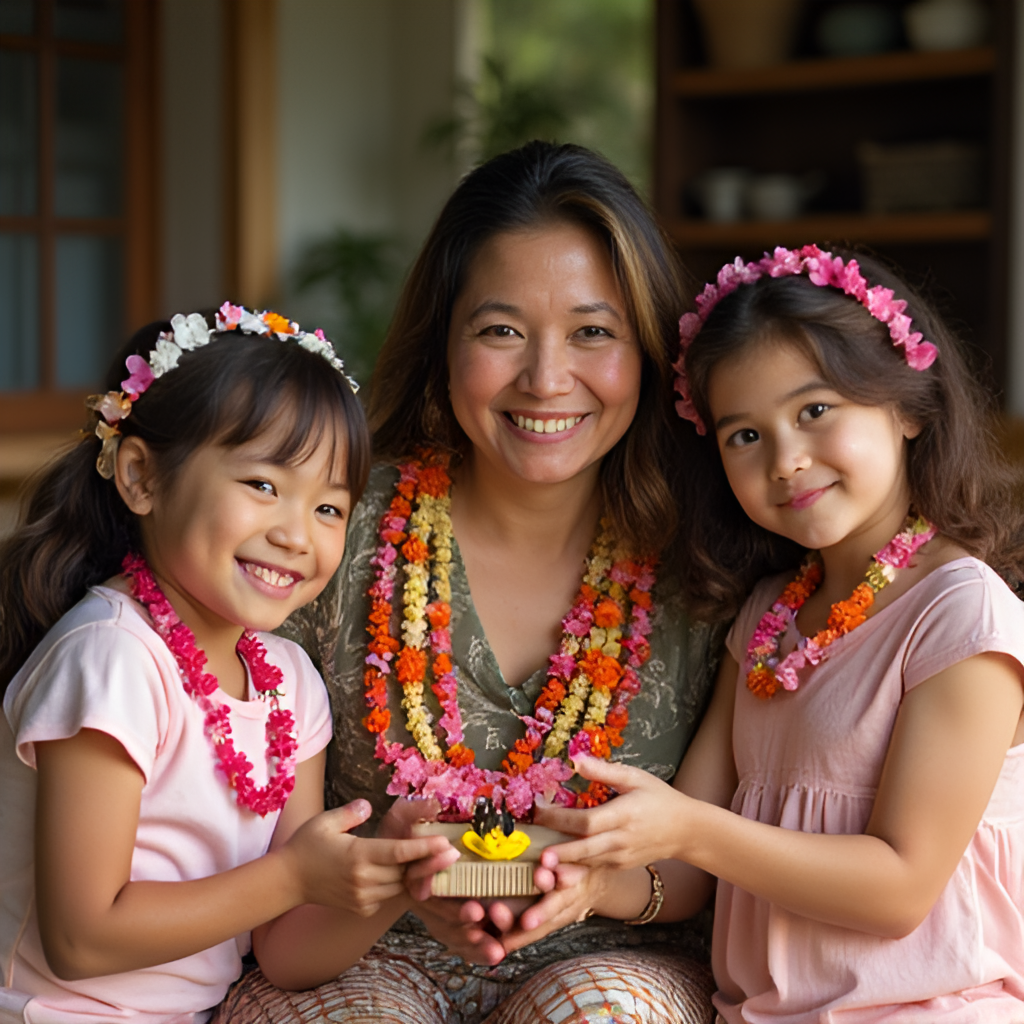
This image is a fictional image generated by GlobalTrendHub.
Showing Appreciation: More Than Just Gifts
While gifts are a common way to show appreciation on Happy Mother’s Day globally, in the Chamorro context, acts of service and quality time often hold deeper meaning. Cooking a special meal, helping with chores, or simply spending the day together are highly valued gestures. I’ve seen families come together to prepare a feast, with daughters traditionally bringing vegetables and sons supplying meat, reminiscent of some ancient traditions. It’s about easing Nåna’s burden and allowing her to relax and feel cherished. A heartfelt “Si Yu’us Ma’åse'” (Thank You) carries significant weight in Chamorro culture, and expressing gratitude verbally and through actions is key.
Small, thoughtful gestures can make a world of difference. A handmade card with a personal message in Chamorro, or an attempt to speak a few phrases like “Hu guaiya hao Nåna” (I love you, Mother) can touch a mother’s heart deeply. One year, my cousins and I put on a small performance for our grandmother, singing traditional Chamorro songs she loved. The joy on her face was more precious than any store-bought gift. These personal touches, infused with cultural elements, make the celebration uniquely Chamorro and incredibly meaningful.
Si Yu’us Ma’åse’ para todu i che’cho’mu. (Thank you for all your work.) – A simple phrase that conveys deep gratitude.
Beyond the tangible, the gift of time and presence is often the most cherished. In our fast-paced world, dedicating an entire day to Nåna, free from distractions, is a powerful way to show her she is a priority. This could involve sharing stories, looking through old family photos, or simply sitting together and talking. These moments build stronger bonds and create lasting memories, which, in my opinion, are the true essence of celebrating mothers.
Beyond Biological Mothers: Celebrating All Mother Figures
The concept of “mother” in Chamorro culture extends beyond the biological. Aunties, grandmothers, older sisters, and other female relatives often play significant mothering roles in a child’s life. Happy Mother’s Day is an opportunity to honor all these women who have provided guidance, support, and love. My own upbringing involved a network of strong female figures who each contributed to shaping who I am today. Celebrating them alongside my biological mother felt natural and important. It acknowledges the collective effort and love that goes into raising a child in a close-knit community like that on Guam.
This broader definition of motherhood is not unique to Chamorro culture, but it is certainly a prominent and beautiful aspect. Many cultures recognize the vital contributions of women who nurture and care for others, regardless of biological ties. This inclusive approach to Mother’s Day allows for a wider expression of gratitude and acknowledges the diverse forms that maternal love can take. It’s a reminder that the impact of a caring woman can be felt far and wide within a family and community.
A Personal Reflection on Motherhood
From my perspective, being a mother is one of the most challenging and rewarding roles imaginable. It requires boundless patience, unconditional love, and an endless capacity for selflessness. I’ve witnessed my own mother navigate difficulties with grace and strength, always prioritizing her family’s well-being. Her resilience, a trait I see in many Chamorro women, is truly inspiring. The lessons learned at her knee, the stories she shared, and the values she instilled in me are gifts I carry every day. This personal connection makes celebrating Happy Mother’s Day not just a societal obligation, but a deeply personal expression of love and thanks.
This image is a fictional image generated by GlobalTrendHub.
Conclusion: The Enduring Spirit of Chamorro Mothers
In conclusion, celebrating Happy Mother’s Day in the Chamorro culture is a beautiful blend of global tradition and local custom. It’s a day to pause and reflect on the incredible contributions of mothers and mother figures who enrich our lives in countless ways. From the historical respect for women in Chamorro society to the modern expressions of love and gratitude, the spirit of honoring Nåna remains strong. As we continue to celebrate Biba Ha’ånen Mannåna, let us remember that the most valuable gifts we can offer are our time, our love, and our sincere appreciation for the remarkable women who shape our world.
For more information on the history of Mother’s Day, you can visit History.com. To learn more about Chamorro language and culture, explore resources like ChamorroLanguage.com.
Find more ways to show appreciation for the mothers in your life at /search?q=happy mother’s day.