Weather: Your Daily Guide to the Atmosphere
- Understanding Weather: More Than Just Small Talk
- What’s Behind the Forecast? The Science of Weather
- From Sunshine to Snowstorms: Exploring Types of Weather
- Predicting the Unpredictable: How Weather Forecasts Are Made
- Weather’s Ripple Effect: How it Shapes Our Daily Lives
- Weather vs. Climate: Why the Distinction Matters
- Navigating the Atmosphere: Final Thoughts on Weather
Weather is something we all experience, every single day. It’s the state of the atmosphere at a particular place and time, encompassing everything from temperature and humidity to precipitation and wind. It’s the first thing many of us check in the morning, influencing our clothing choices, travel plans, and even our mood. My own experience living in a region with four distinct seasons has shown me just how much the daily atmospheric conditions can dictate our activities. Whether it’s a sudden downpour that forces you to grab an umbrella or a heatwave that sends you seeking refuge in air conditioning, weather is a constant, powerful force.
What’s Behind the Forecast? The Science of Weather
Have you ever stopped to wonder what actually causes the weather we experience? It’s a complex interplay of various atmospheric factors. The primary drivers include air pressure, temperature differences, and moisture levels. Think of it like a giant, dynamic system where everything is connected. The sun’s uneven heating of the Earth creates temperature variations, which in turn lead to differences in air pressure. Air naturally flows from areas of high pressure to low pressure, creating wind.
Moisture in the atmosphere, in the form of water vapor, plays a crucial role too. When this water vapor cools and condenses, it forms clouds, which can then lead to precipitation like rain or snow. Even geographical features like mountains and large bodies of water can influence local atmospheric conditions, creating unique microclimates.
These factors don’t exist in isolation; they interact constantly, creating what we call weather patterns. These patterns can be as simple as a sunny spell or as complex as a hurricane. Understanding these underlying scientific principles is key to grasping why the weather behaves the way it does.
From Sunshine to Snowstorms: Exploring Types of Weather
The sheer variety of weather phenomena we can witness is quite astonishing. We have the familiar conditions like sunshine, clouds, wind, rain, and snow. But the atmosphere can also produce more dramatic events.
- Thunderstorms, often accompanied by lightning and heavy rain, are a common occurrence in many parts of the world.
- Tornadoes and hurricanes represent more severe forms of atmospheric power, capable of causing significant damage.
- Extreme temperatures, both hot and cold, can lead to heatwaves or cold waves, posing risks to health.
- Other phenomena include fog, hail, dust storms, and even less common events like snownados or firestorms.
Each type of weather has its own unique characteristics and can have vastly different impacts on the environment and human activities. Observing these different atmospheric manifestations truly highlights the dynamic nature of our planet.

This image is a fictional image generated by GlobalTrendHub.
Predicting the Unpredictable: How Weather Forecasts Are Made
Predicting the weather is a fascinating blend of science, technology, and expertise. It’s something humans have attempted informally for thousands of years, but modern forecasting relies on sophisticated tools and techniques.
The process begins with extensive data collection from various sources around the globe. This includes observations from ground-based weather stations, weather balloons, satellites, radar, and even ships and buoys at sea. This data provides a snapshot of the current state of the atmosphere.
This vast amount of data is then fed into powerful supercomputers that run complex mathematical models. These models, based on the principles of fluid dynamics and thermodynamics, are designed to simulate how the atmosphere will change over time. Meteorologists then analyze the output from these models, combining it with their own expertise and understanding of local conditions to refine the forecast.
While forecasting has become incredibly accurate, it’s important to remember that the Earth’s weather system is inherently chaotic. Minor variations in initial conditions can lead to significant differences in future outcomes, especially for longer-range forecasts. That’s why forecasts are often presented with probabilities and can change as new data becomes available.
Weather’s Ripple Effect: How it Shapes Our Daily Lives
The influence of weather extends far beyond simply deciding whether or not to carry an umbrella. It profoundly impacts many aspects of our daily lives and even the broader economy.
Think about transportation – heavy rain, snow, fog, or strong winds can cause delays or even cancellations of flights, trains, and road travel. Agriculture is also heavily reliant on atmospheric conditions; droughts or floods can devastate crops and impact food prices. Even our energy consumption is linked to weather, with demand for heating and cooling fluctuating with temperature changes.
Beyond the practicalities, weather can affect our health and well-being. Extreme heat can be dangerous, and changes in temperature and humidity can influence the spread of certain diseases. On a more personal level, I’ve noticed how a sunny day can instantly boost my mood, while a prolonged period of grey skies can sometimes feel draining.
It’s clear that weather isn’t just an external force; it’s deeply intertwined with our daily experiences and societal functions.
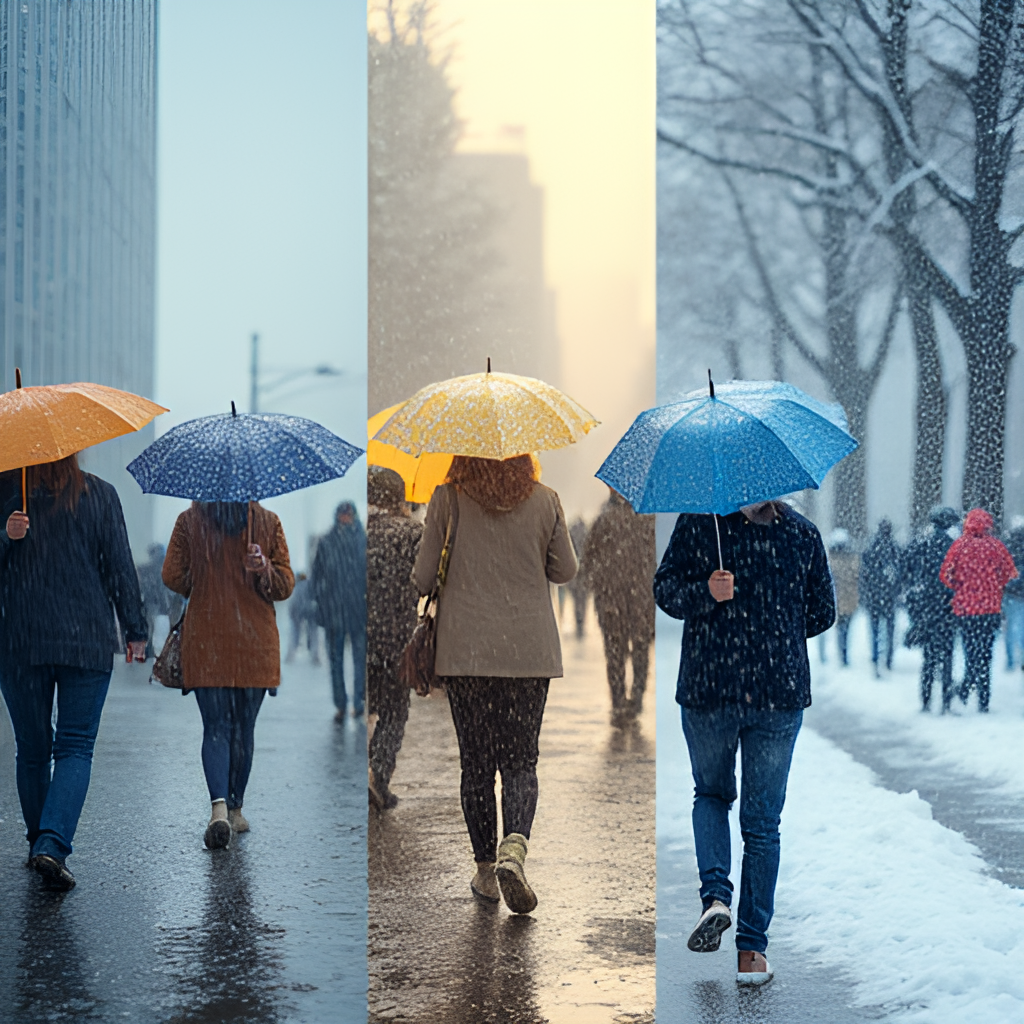
This image is a fictional image generated by GlobalTrendHub.
Weather vs. Climate: Why the Distinction Matters
While often used interchangeably, there’s a crucial difference between weather and climate. Weather is the state of the atmosphere at a specific point in time and location – what you see when you look out the window today. Climate, on the other hand, is the average weather conditions over a long period, typically 30 years or more.
Think of it this way: weather tells you what to wear today, while climate tells you what types of clothes to have in your wardrobe. A single unusually hot day is weather, but a trend of increasingly hot summers over several decades is indicative of a changing climate.
Understanding this distinction is vital, especially when discussing topics like climate change. Changes in weather patterns and an increase in the frequency or intensity of extreme weather events are key indicators of a warming climate. While daily or even yearly weather can fluctuate significantly, climate changes happen more slowly, over years, decades, or even centuries.
My own observations of shifting seasonal patterns in my area, like later frosts or more intense summer heat, align with the broader trends scientists are observing globally. It’s a tangible reminder that while weather is immediate, climate represents the long-term picture.
Navigating the Atmosphere: Final Thoughts on Weather
Weather is a fundamental part of our world, constantly shaping our environment and influencing our lives in countless ways. From the simple pleasure of a sunny day to the challenges posed by severe storms, the atmosphere is a source of both wonder and respect. Understanding the science behind weather, appreciating its diverse manifestations, and recognizing its impact on our daily existence are all essential. As we continue to observe and study weather patterns, and as concerns about climate change grow, our ability to predict and adapt to atmospheric conditions will become increasingly important. Weather isn’t just a topic of conversation; it’s a vital force that connects us all.